MARKET NOTE
A practical framework for looking beyond first impressions when comparing new developments.
Konstantinos Papadopoulos
6 min read
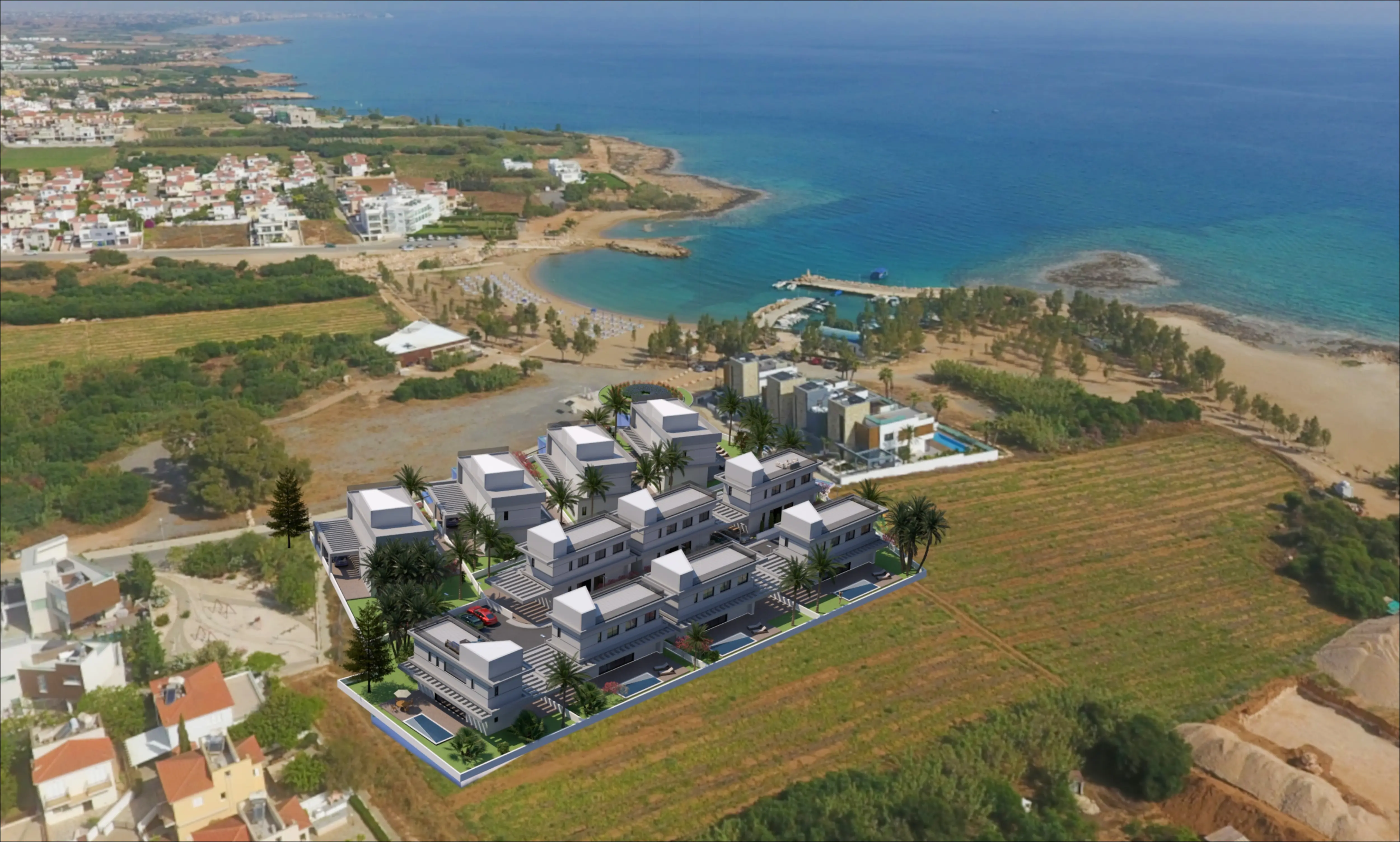
Buying off-plan is not simply about choosing a floor plan and waiting for the property to be completed.
For me, recommending a development means looking much deeper than the brochure, the renders or the headline price.
A good off-plan purchase starts with one question:
What exactly is the buyer getting for the money — and how well is that purchase likely to hold up over time?
That means looking at the developer, the specification, the payment structure, the position of the unit and, just as importantly, the details that are easy to overlook when everything still exists only on paper.
I start with the developer
The developer matters enormously.
Over the years, one of the most useful forms of due diligence for me has actually come from the resale market.
When you walk into a property that was built 15 or 20 years ago and it is still in good condition, has been maintained properly and the title deeds were handled correctly, that tells you a lot about the company that built it.
That experience naturally creates a level of trust.
Like most professionals who have been in the market for some time, I have developers I feel more comfortable recommending because I have seen their work, how their projects age and how they deal with buyers over the long term.
That does not mean I would automatically choose one development over another simply because of the developer's name.
But if two projects are similar in price and location, the developer's track record can become a very important deciding factor.
Flexibility can tell you something
Most payment plans in the Cyprus new-build market follow a broadly similar structure.
What I pay attention to is how flexible the developer is willing to be.
A company that can accommodate reasonable changes to payment timing often gives me more confidence than one that appears to be under pressure to collect money at every possible stage.
I would never judge a company's financial health from this alone, but flexibility can be a useful signal when it is combined with a strong track record and a well-established operation.
For the buyer, the important point is that the payment schedule should make sense, be clearly documented and allow enough time to coordinate banking requirements properly.
The specification can change the real price dramatically
This is one of the most important parts of any off-plan purchase.
Two properties can have a similar advertised price but be very different in real value once you look at what is actually included.
The specification should never be treated as a small technical document.
It can represent tens of thousands of euros.
A roof garden, for example, may be included in one project and offered as an additional extra in another.
The same applies to swimming pools.
An overflow pool, upgraded finishes, landscaping, external kitchens, shading systems or other features can add significant cost.
In some cases, a roof garden and a higher-specification pool alone can represent a substantial additional budget.
So when I compare developments, I do not only compare headline prices.
I compare finished-property cost.
That is the number that matters.
Look beyond the headline specification
The next level is the detail inside the specification.
What allowance has been included for ceramic tiles per square metre?
What is included in the bathrooms?
What type of sanitary ware is specified?
What standard of wardrobes and kitchen cabinetry is included?
Are air-conditioning units included or only the provisions?
What about landscaping, photovoltaic systems, electric gates or smart-home features?
A specification can look impressive until you realise that the budgets allocated to finishes are relatively low and the buyer will need to upgrade almost everything they actually want.
This is why I like to go through the specification carefully before presenting the development as good value.
Construction standards matter — but they are not the whole story
New buildings in Cyprus are subject to minimum energy-performance requirements, and current requirements for new buildings are based around nearly zero-energy performance standards.
That is positive for buyers, particularly compared with much older housing stock.
But regulation alone does not make every new development equal.
There is still a difference between meeting the minimum required standard and delivering a property that feels well designed and well finished.
That is where materials, detailing, supervision and the developer's quality control become important.
Not every unit in a good development is equally good
This is one of the biggest mistakes buyers make when looking at off-plan projects.
They assess the development as a whole, but not the individual unit.
The best units normally sell first.
Corner properties.
Homes attached to green areas.
Units with better orientation.
More privacy.
Better views.
Larger plots.
Fewer neighbouring properties.
These details can affect both how enjoyable the property is to use and how desirable it may be when it is eventually resold.
For a buyer purchasing primarily for personal use, I would normally pay more attention to securing one of the stronger units.
For an investor, the strategy can sometimes be different.
A less obvious unit can still be a better investment
An investor does not always need the best unit in the project.
Sometimes the better investment is one of the remaining units if the price reflects its position.
If I can secure a lower entry price, the numbers may work better even if the unit is not the first one I would choose for myself.
This is where buying a property and buying an investment become two different exercises.
For an investment, I care about the relationship between:
Entry price → expected income → resale potential → future appreciation.
A slightly weaker position inside a strong development can still make sense if the acquisition price creates enough margin.
Location still has to support the project
A good developer and a strong specification cannot fix the wrong location.
When I compare two developments at a similar price, I look at the wider area just as carefully as the building itself.
Is the area improving?
Is new infrastructure being added?
Is there demand from buyers after completion?
Is the surrounding land likely to be developed?
How easy will it be to explain the location to the next buyer five or ten years from now?
This is where price appreciation becomes important.
I am not only interested in what the property may rent for when it is completed.
I want to understand whether the location itself has room to become more valuable.
Design matters more than people think
The layout of the property is another area where off-plan buyers can get distracted by renders.
A beautiful external image can hide an average floor plan.
I look at how the property will actually work.
Where is the kitchen positioned?
How does the living area connect with the outside space?
Is there enough storage?
Are bedrooms properly sized?
Does the orientation make sense?
Is the swimming pool positioned well?
How much privacy will there really be once neighbouring properties are completed?
These are small things on a plan but very big things once someone starts living in the property.
Off-plan should be evaluated as a finished product
This is probably the simplest way to describe my approach.
I try not to look at an off-plan property as it is being sold today.
I try to imagine it finished, occupied and eventually resold.
What will the buyer actually receive?
What will the property cost after all the extras they really want are included?
How will the unit compare with the rest of the project?
Will the location still be attractive in several years?
And if the owner decides to sell, what reason will the next buyer have to choose that particular property?
That is the standard I use before I feel comfortable recommending a development.
A good off-plan purchase is usually found in the details
The brochure gets your attention.
The details determine whether the purchase makes sense.
For me, the strongest developments normally combine several things:
a developer with a proven track record
a clear and realistic specification
sensible payment terms
strong individual unit positioning
good design
a location with long-term demand
and a purchase price that still makes sense once all extras are considered
Buying off-plan always involves looking forward.
The better the questions you ask before construction begins, the fewer surprises you are likely to face when the keys are finally handed over.
Related articles
LOCATION
The Eastern Coast of Cyprus: Protaras, Ayia Napa and the Famagusta Region
The eastern coast of Cyprus is often spoken about as one destination. In reality, choosing between Protaras, Ayia Napa and the surrounding towns and villages can mean choosing three very different ways of living.
6 min read
Read article →
BUYING GUIDE
What International Buyers Should Know Before Choosing Property in Cyprus
An editorial guide to considering location, priorities and the questions worth asking before a property search.
8 min read
Read article →
BUYING GUIDE
Buying Property in Cyprus: A Step-by-Step Guide for International Buyers
A guide structure for understanding the stages of a considered purchase, from first conversation to completion.
10 min read
Read article →
CONSIDERING PROPERTY IN CYPRUS?
Start with a clearer picture.
Tell me what you are looking for and I will personally review your requirements.